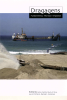
Dragagens: fundamentos, técnicas e impactos

Keywords:

Monitoring, Coastal zones, Hydraulic equipment, Dredging, Environmental impact

Synopsis

The book is divided into five chapters, covering various topics in the field of dredging, the equipment used, sedimentary processes and monitoring methods, the impacts of dredging operations, and concluding with the presentation of some case studies and applications of dredged materials.

This book aims to be an up-to-date and comprehensive document on the subject of dredging, aimed at professionals in the field and university students, serving as a reference in various aspects related to the practice of dredging.
Author Biographies

Carlos Coelho

Carlos Coelho is an Associate Professor with Habilitation in the Department of Civil Engineering at the University of Aveiro, where he completed his PhD in Civil Engineering, specializing in Coastal Engineering, in 2005. He is responsible for several curricular units in the field of Hydraulics in the Civil Engineering courses at the University of Aveiro. He was the President of the Steering Committee of the Portuguese Association of Water Resources (APRH) between 2021 and 2023 and the President of the Specialized Committee on Coastal and Marine Zones of the APRH between 2018 and 2021. He was President of the General Assembly of the APRH between 2023 and 2025 and is the President of the Fiscal Council of the APRH for the 2026-2027 biennium. She has been a member of the Portuguese delegation to PIANC - The World Association for Waterborne Transport Infrastructure since 2020. She conducts scientific research in the area of ​​sedimentary dynamics and coastal erosion mitigation, published in numerous scientific journal articles and conference proceedings. She has supervised several doctoral theses and dozens of master's dissertations, and also supervises several ongoing projects. She was a member of the Monitoring Committee of the Coastal Working Group and collaborates on consultancy work abroad, preparing studies on coastal management, sedimentary dynamics and hydrological behavior.

Paulo A. Silva

Paulo Alves da Silva holds a bachelor's and master's degree in Geophysical Sciences from the Faculty of Sciences of the University of Lisbon and obtained his doctorate in Physics from the University of Aveiro (UA) and in Mechanics of Geophysical Media and Environment from the Joseph Fourier University, Grenoble.

Between 1993 and 2001, he was an Assistant in the Department of Physics at UA, between 2001 and 2024 an Assistant Professor, and since 2024 he has been an Associate Professor. He has held various positions and roles at UA, such as coordinator of the Oceanography and Marine Geology research group at CESAM, director of the Meteorology, Oceanography and Geophysics course, and currently, Director of the Master's program in Marine and Atmospheric Sciences.

He has extensive experience in the development of numerical models and formulations for calculating sediment transport, in studies of the morphodynamics of coastal systems, and in the collection of field and laboratory data. These studies are reflected in the body of scientific publications produced, participation in national and international research projects as principal investigator or team member, supervision of postdoctoral researchers, and guidance of doctoral, master's, and undergraduate thesis students.

He has extensive experience as a professor, having been responsible for several undergraduate and graduate courses in the areas of physical oceanography, physics, fluid mechanics, numerical modeling, and geophysical data processing.

He has developed and participated in various science outreach activities, such as lectures in schools and participation in educational projects.

capa do livro Dragagens: fundamentos, técnicas e impactos

Downloads

Published

2011 December 1

Series

Categories

License

Creative Commons License

This work is licensed under a Creative Commons Attribution 4.0 International License.

Details about this monograph

ISBN-13 (15)

978-972-789-346-1

How to Cite